
Getting Clay County Court Records
The Clerk of the Clay Circuit and Superior Courts keeps the official records for both trial courts. Start with MyCase for the public CCS and linked images. For a missing public filing or certified copy, contact the Clerk at 812-448-9024 or visit 609 East National Avenue in Brazil. County sources place the office in Room 209, while the state directory says number 213, so verify the room before mailing. No general mail, fax, email, drop-box, turnaround, or ID rule was published.
- Note the cause number, court, party, event date, and document name.
- Check MyCase and the state document-access matrix first.
- Call or visit the Clay Clerk for an individual case file.
- Ask the Clerk to confirm page count, certification, delivery, and current charge.
- Check that the copy matches the court and cause number requested.
Clay Clerk Holds the File
Indiana Trial Rule 77 assigns the Clerk the CCS, case file, Record of Judgments and Orders, Judgment Docket, and indexes. Clay local rules also direct the Clerk to receive pleadings, enter them on the CCS, scan them, and route them to the assigned court. MyCase is a public view of selected Odyssey data, not a second custodian.
The Clay Clerk responsibilities page describes those records.
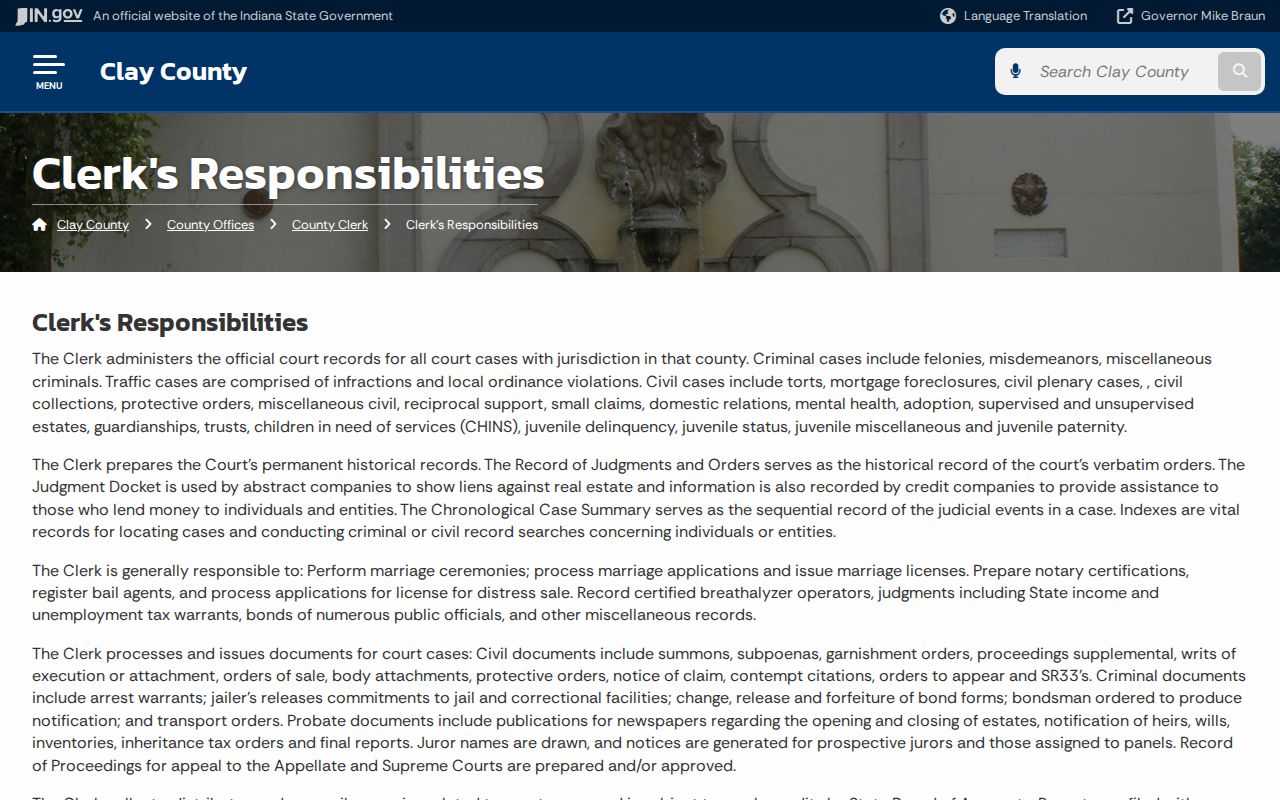
This division of work explains why a judge may set a hearing while the Clerk supplies the filed copy.
Court Record Types
Clay court records include the CCS, filed pleadings, motions, service returns, orders, judgments, and public exhibits. The Record of Judgments and Orders preserves designated orders, while the Judgment Docket tracks money judgments. Court reporters handle transcripts. The Clerk also keeps indexes and appellate-record materials. These are related records, but one does not substitute for another.
- Chronological Case Summaries and case indexes
- Pleadings, motions, service returns, and public exhibits
- Judgments, designated orders, and the RJO
- Criminal, civil, family, probate, and small-claims files
- Judgment Docket entries and appellate-record materials
CCS Versus Clay Case File
The CCS is the official short sequence of judicial events. It works as a locator for the fuller record. A motion may appear as one CCS line while the filed motion contains many pages. The RJO preserves final judgments and designated orders verbatim. The Judgment Docket has the narrower task of tracking money judgments.
The Indiana public-records page routes case-file requests to the local clerk.
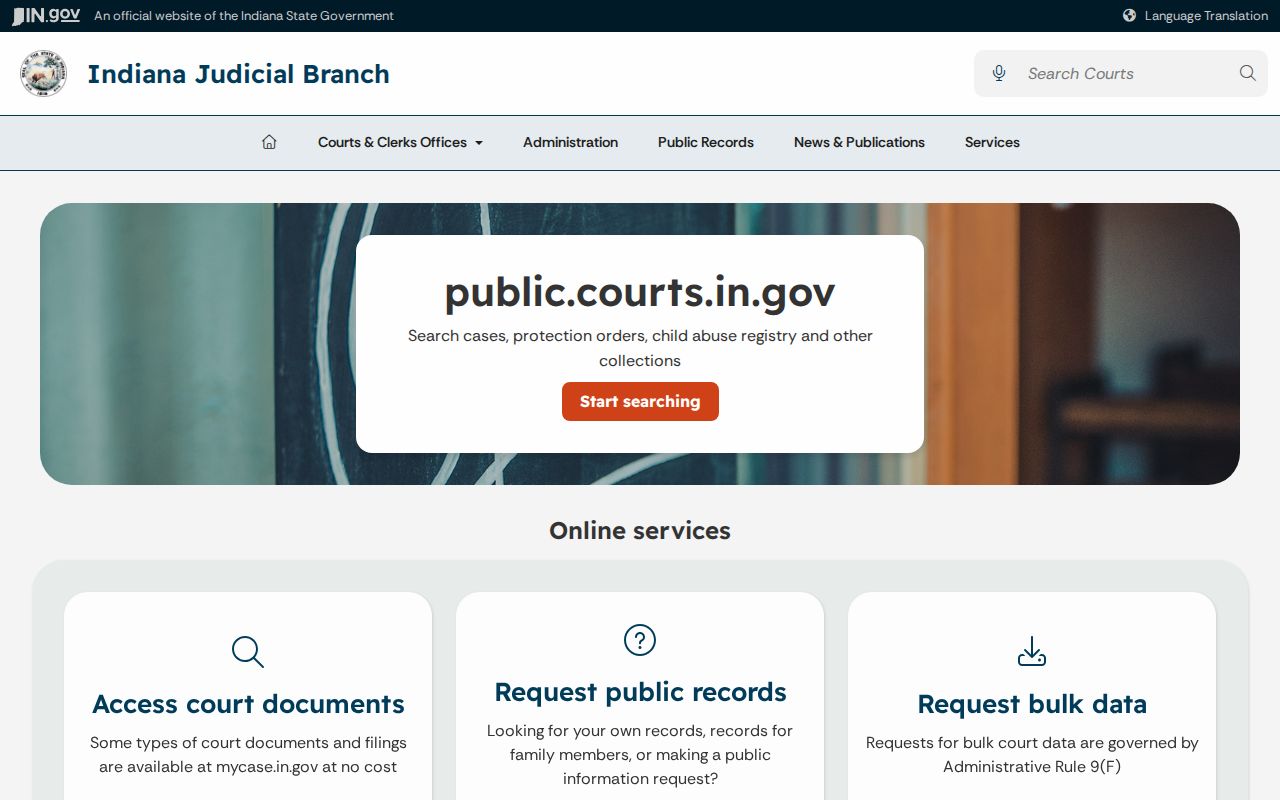
Ask for the named document, not merely “the docket,” when its full text matters.
Inside a Clay County Court Record
The case file expands the short CCS entries into the documents that caused each event. A file header identifies the court, cause number, filing date, case type, caption, and status. Party roles and counsel appear where public. Filed papers, service records, orders, and judgments supply the text that a one-line event description cannot carry.
| Case Number | A Clay identifier such as 11C01-YYMM-TT-######. |
|---|---|
| Pleadings | Petitions, complaints, answers, motions, and responses. |
| Orders & Judgments | Signed rulings and final dispositions, where public. |
| Docket Sheet | The CCS sequence of filings, hearings, orders, and other events. |
| Exhibits | Public filed material; courtroom exhibits may have separate access limits. |
Missing Clay Orders Need Requests
Open the CCS and note the event date and document title. Then check the Public Access to Court Documents matrix. It shows that remote document access changes by case type and user role.
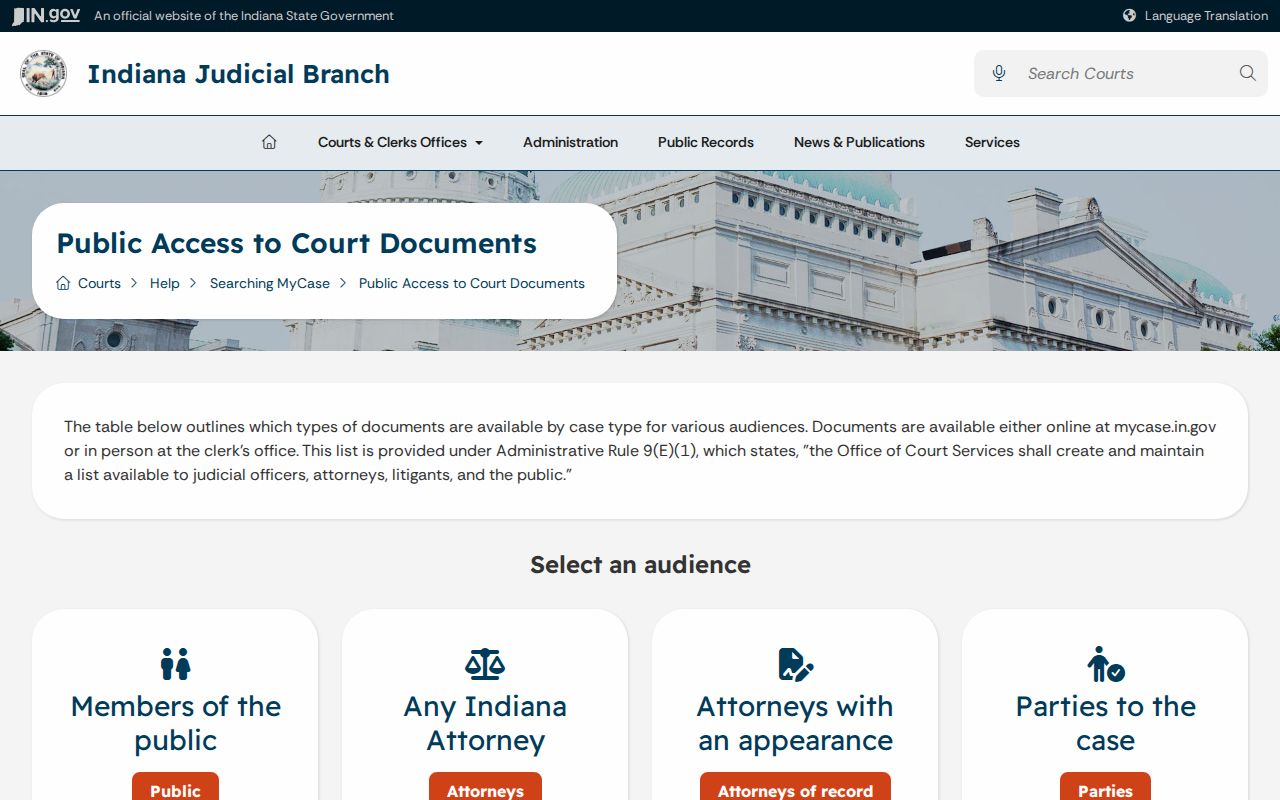
If a public image is absent, give the Clerk the cause number, event date, and title. A missing link can reflect older data or online limits, not confidentiality. Transcripts go to the court reporter or court office because they are not ordinary Clerk copies.
Certified Copies and Fees
A plain copy reproduces the record. A certified copy adds the Clerk seal and certification that it is a true copy from the official file. The current Indiana fee framework charges by page and by certificate. Ask the Clerk for the final total because no Clay form publishes postage, rush, electronic-image, or separate search charges.
| Item | Amount |
|---|---|
| Plain letter or legal page | $1 per page |
| Certificate under seal | $1 per page |
| One-page certified copy illustration | $1 per page |
| Clay-specific search fee | $1 per page |
Clay County Clerk's Office
609 East National Avenue, Room 209
Brazil, IN 47834
812-448-9024
No Clay Copy Form Published
No official Clay certified-copy form, request fields, general mail route, ID rule, or turnaround was located. Call before sending money or papers. The state record-request routing page sends trial-case requests back to the county Clerk.
The Office of Judicial Administration form is for statewide agency records, not an individual Clay file.
The OJA APRA form illustrates that separate path.
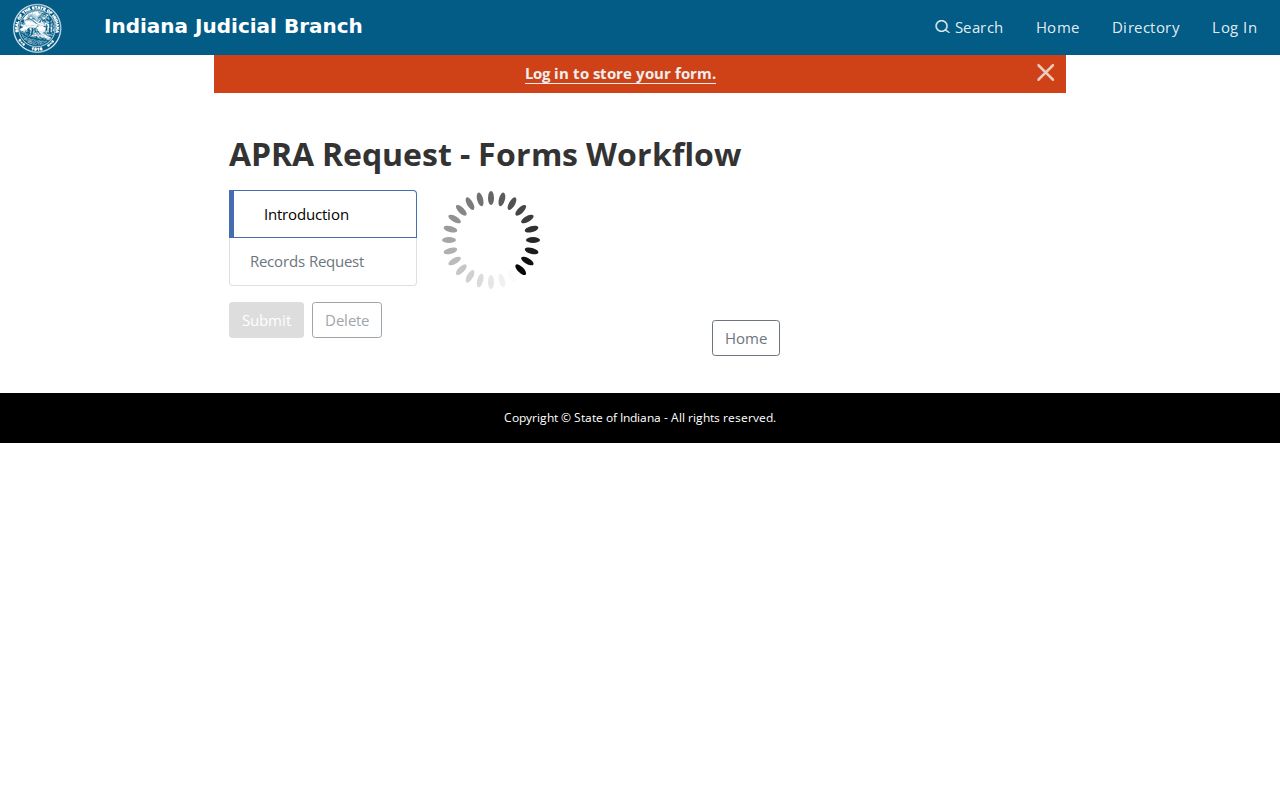
Bulk or compiled data also routes to Office of Court Services under Rule 9(F).
Sealed Records and Public Access
Indiana Access Rule 4 presumes court records are public unless Rule 5, another law, or a court order excludes them. Confidential cases, sealed documents, protected personal data, mental-health matters, and some juvenile or protection-order material can be unavailable or redacted. An absent image does not prove a record is sealed. Ask the Clerk whether it is public but not digitized.
Key Rules:
Indiana Access Rule 4 presumes public access unless another rule or law excludes the record.
Indiana Access Rule 5 defines confidential cases, excluded documents, redactions, and protected data.
Indiana Access Rule 9 supplies the verified-request and court-order path for excluded records.
Clay Access Rules in Practice
Family, juvenile, mental-health, protection-order, and expungement records can receive tighter treatment. Some criminal and civil orders are online while other filings are available only in person. Indiana's Access to Public Records Act does not override court confidentiality rules.
The current Access to Court Records index gathers the controlling rules.
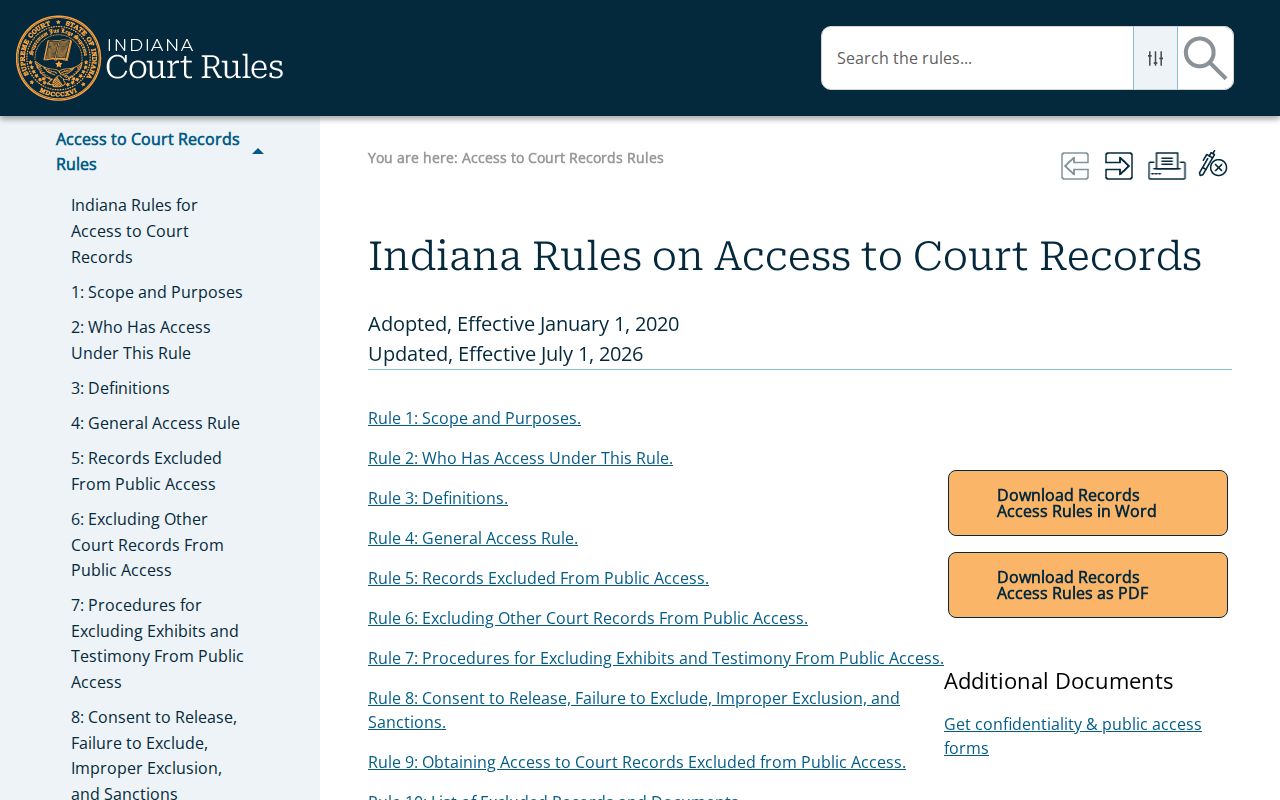
Ask whether a record is public, sealed, redacted, older, or simply not digitized before drawing a conclusion.
Clay Record Requests Need Precision
A useful request identifies the exact record rather than asking for an entire file without limits. Start with the cause number and assigned court. Add the party name, case type, filing or event date, and document title shown in the CCS. State whether a plain copy is enough or whether the Clerk must attach a certificate under seal. If delivery is needed, ask about the accepted address, payment form, postage, and total before sending anything because Clay has not published a general copy-request form.
The type of record also controls the custodian. The Clerk handles the CCS, pleadings, filed motions, public orders, RJO material, Judgment Docket entries, and certified case documents. A court reporter handles a transcript of spoken proceedings. Statewide Office of Judicial Administration records use the state APRA route, while bulk or compiled case data goes to Office of Court Services under Rule 9(F). Federal filings belong to PACER, CM/ECF, or the federal Clerk rather than the Clay Clerk.
Indiana's document matrix should be checked before assuming an image will appear in MyCase. Criminal felony and misdemeanor categories often expose sentencing orders rather than each filing. Civil plenary, tort, collection, foreclosure, and small-claims categories can expose selected non-confidential documents. Domestic-relations, adoption, juvenile, mental-health, and protection-order records receive more limited treatment. Online availability can also differ for a public guest, a party with an access code, and an attorney.
A denial or missing image should be described accurately. The document may be confidential, sealed, redacted, older and not digitized, public only at the courthouse, or simply absent from the remote image set. Ask the Clerk which condition applies. If access is excluded under Rule 5, Rule 9 may require a verified request, notice to affected people, a possible hearing, and a written judicial order. The Clerk cannot promise release outside that process.